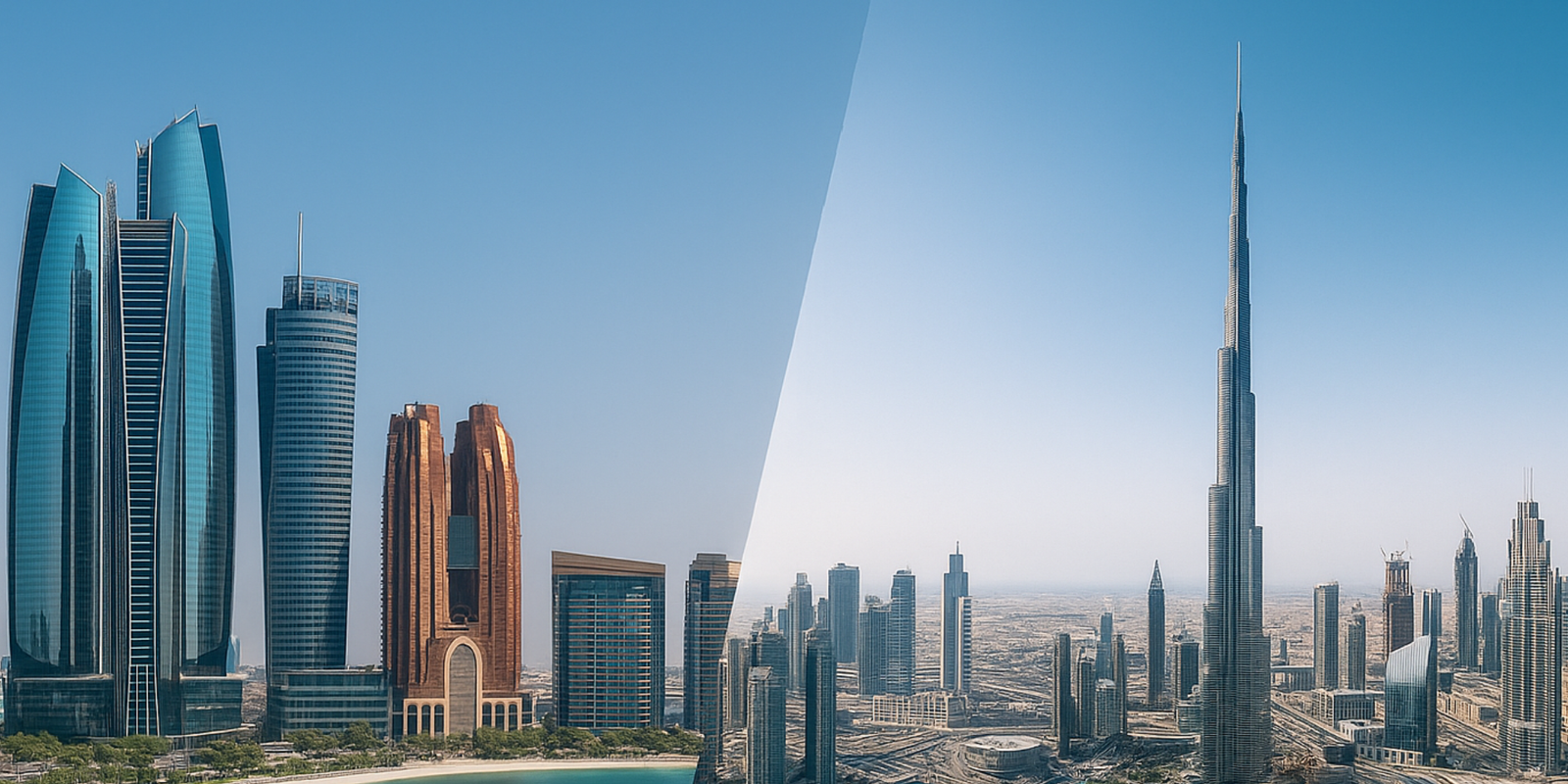
In 2025, the question on every investor’s mind is no longer “Why Dubai?” — it’s “What about Abu Dhabi?”
For years, Dubai has dominated global headlines with its futuristic skyline and record-breaking developments. But today, Abu Dhabi — the UAE’s capital — is executing a long-term strategy that could quietly redefine the balance of power in the Abu Dhabi vs Dubai real estate landscape.
From government-backed megaprojects like Hudayriyat Island to booming non-oil GDP growth and a focus on sustainability, the emirate is no longer just catching up — it’s positioning itself to lead.
Why Abu Dhabi vs Dubai Real Estate Matters
Dubai may still grab the spotlight, but Abu Dhabi is building depth — and that difference matters.
- Dubai’s market thrives on global demand, short-term cycles, and brand power.
- Abu Dhabi’s strategy is patient and government-driven, focused on livability, long-term ROI, and stability.
For investors comparing Abu Dhabi vs Dubai real estate, this shift means new opportunities: less speculation, more fundamentals, and a more sustainable growth story.
Economic Growth and Population Boom
Strong Non-Oil Economy
Abu Dhabi’s transformation is backed by hard data, not just ambition.
- In Q1 2025, GDP reached AED 291 billion, up 3.4 % year-on-year, while non-oil sectors grew 6.1 %.
– Source: SCAD - The IMF projects Abu Dhabi’s economy to expand 4.2 % in 2025 and 5.8 % in 2026, outpacing Dubai’s 3.3–3.5 %.
– Source: Arabian Business
This shows Abu Dhabi’s growth is built on diversification, tourism, and innovation — not property speculation.
Population and Housing Demand
Abu Dhabi’s population surpassed 4.1 million in 2024, a 7.5 % rise in one year.
– Source: SCAD
While Dubai faces potential oversupply, Abu Dhabi’s residential stock remains limited, especially in luxury and family segments.
The result: higher occupancy, healthy rental yields, and long-term appreciation potential.
5-Year GDP Snapshot (2020–2025)
| Year | GDP Growth (%) | Key Trend |
|---|---|---|
| 2020 | -5.1 | COVID slowdown |
| 2021 | +2.6 | Recovery phase |
| 2022 | +5.0 | Non-oil expansion |
| 2023 | +4.4 | Diversification push |
| 2024 | +4.3 | Stable growth |
| 2025 | +3.4 (Q1) | Infrastructure momentum |
Hudayriyat Island by Modon
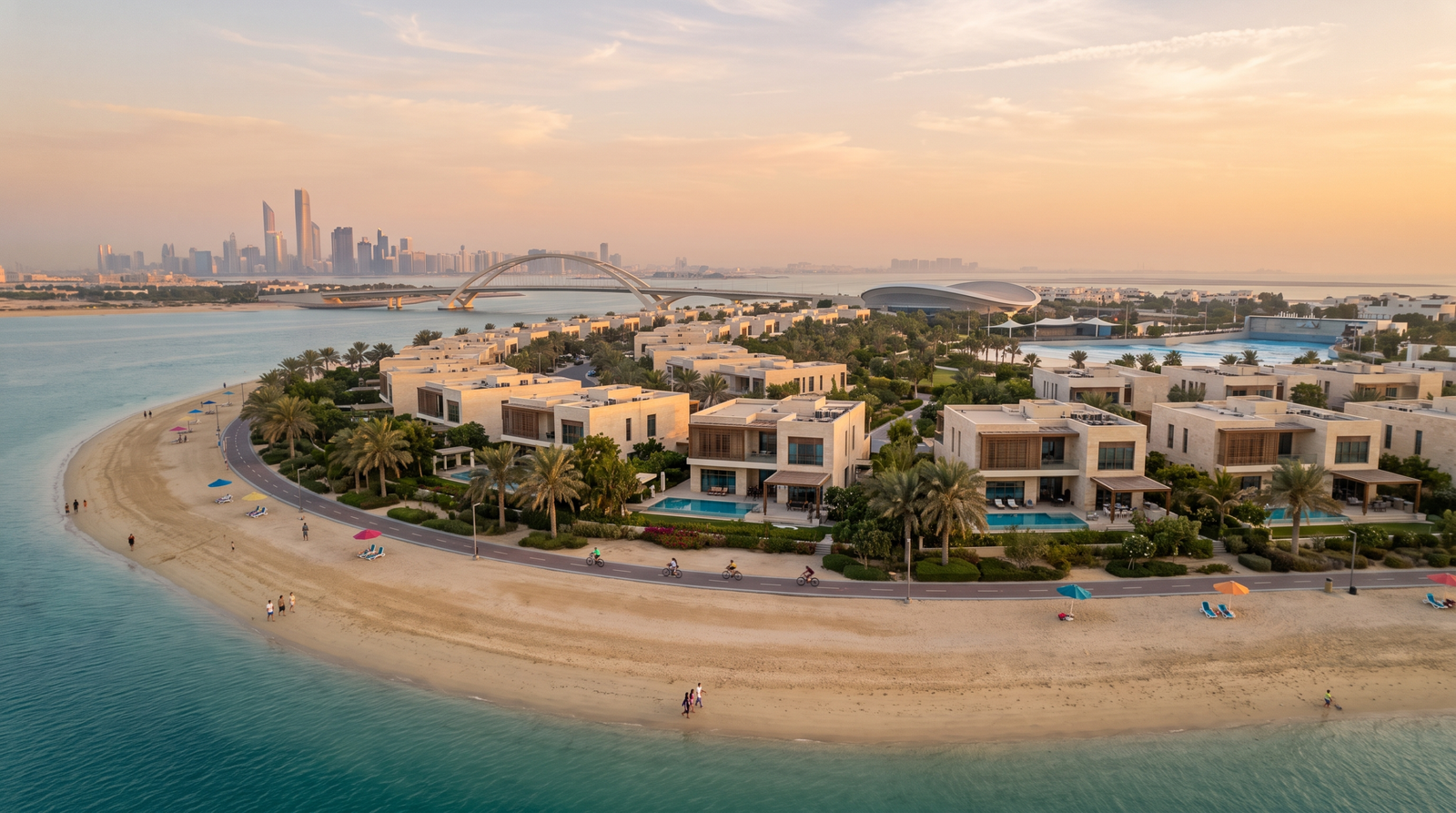
When experts discuss Abu Dhabi investment opportunities, one name dominates: Hudayriyat Island.
Developed by Modon Properties, this master-planned project is the centerpiece of Abu Dhabi’s next chapter — a city built around sports, sustainability, and lifestyle.
Project Overview
- Size: Over 51 million m² (53 % of Abu Dhabi Island). – Source: Abu Dhabi Media Office
- Developer: Modon Properties (owned by ADQ).
- Properties: 3–8-bedroom villas and mansions in Nawayef and Al Naseem.
- Prices: From AED 9 million.
- Handover: 2028–2029.
- Payment Plan: 40/60 (40 % during construction, 60 % on completion).
- Ownership: Freehold for expatriates, Golden Visa eligible.
- Amenities: Surf pool, velodrome, beaches, cycling routes, parks, sports zones, retail promenades, and wellness hubs.
Hudayriyat Island isn’t just another project — it’s a vision for sustainable waterfront living and the physical symbol of Abu Dhabi’s long-term plan.

Government Investment and Vision 2030
Unlike Dubai’s private-sector boom, Abu Dhabi’s development is state-led — driven by long-term policy rather than short-term speculation.
Strategic Direction
- ADQ and Modon are executing large-scale infrastructure projects under Economic Vision 2030.
- Billions are going into transport, tourism, healthcare, and innovation.
- The city’s goal: build a diversified, high-income economy that attracts global investors and families.
Focus on Sustainability
Projects like Hudayriyat use renewable energy, recycled materials, and low-emission design, aligning with the UAE’s Net Zero 2050 initiative.
This focus on green living gives Abu Dhabi a clear advantage in the Abu Dhabi vs Dubai real estate race — it’s building for longevity, not just luxury.
Lifestyle: Abu Dhabi vs Dubai
The two emirates offer distinctly different lifestyles, catering to different audiences.
Abu Dhabi Living
- Quieter, greener, and more family-oriented.
- Spacious villas and waterfront communities.
- Cultural landmarks like Louvre Abu Dhabi.
- Top-tier healthcare and education.
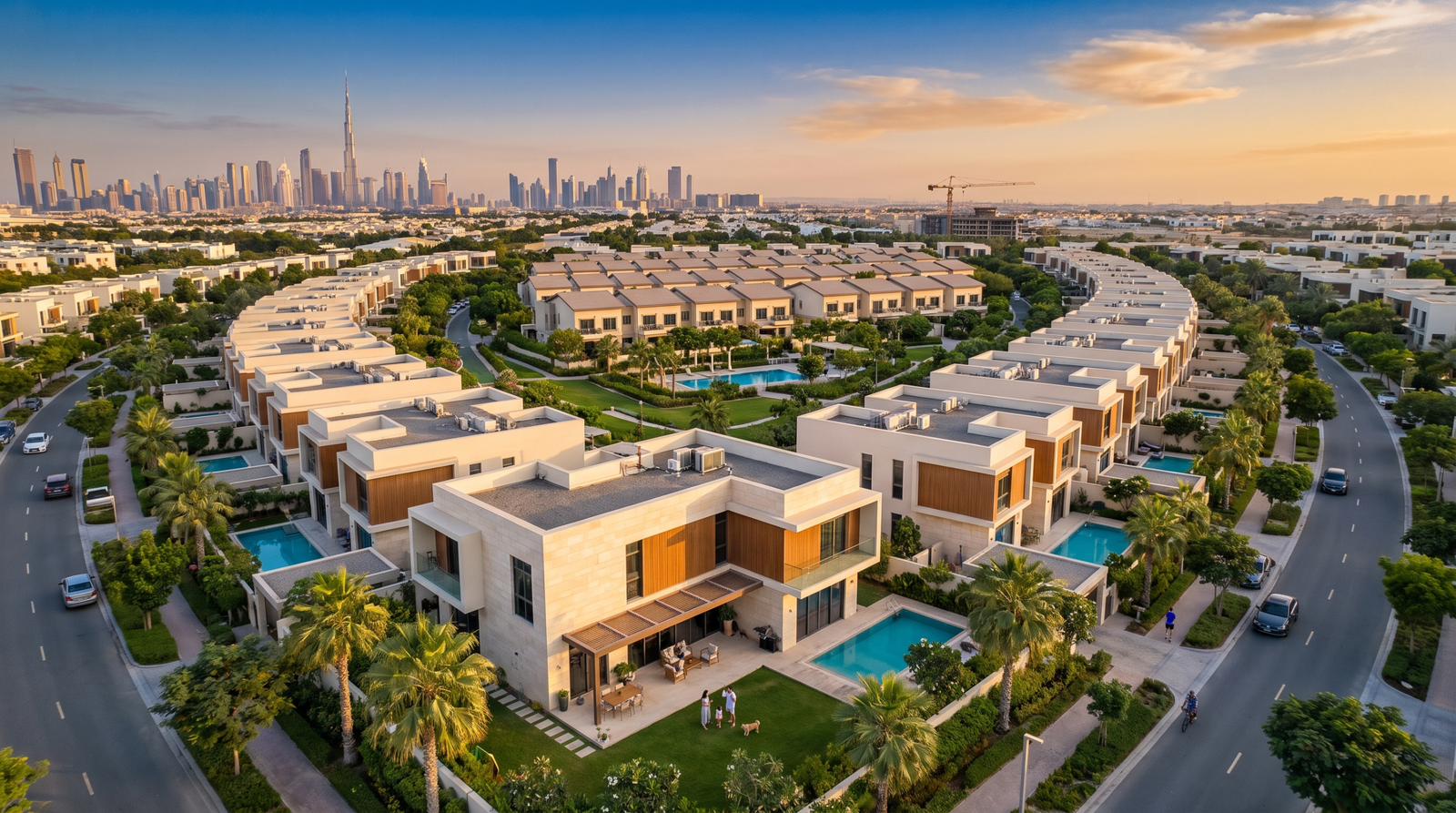
Dubai Living
- Fast-paced and globally connected.
- Strong rental market and resale liquidity.
- More tourism-driven and cosmopolitan.
- Higher density and cost of living.
Summary: Dubai delivers instant excitement and accessibility, while Abu Dhabi provides long-term comfort and security.
A Safer, Smarter Market
For investors evaluating UAE real estate comparison, Abu Dhabi stands out as a stable, government-backed market.
Why It’s Gaining Ground
- Lower risk profile due to public-sector leadership.
- Limited supply in luxury villa segment.
- Attractive incentives, including long-term visas.
- Steady growth across finance, energy, and tech sectors.
As a result, Abu Dhabi is evolving from a quiet capital to a global investment hub known for balance, regulation, and real-world value.
Sports, Wellness, and Sustainability
Abu Dhabi’s long-term vision is rooted in active, healthy, and green living.
Sports Hub
Hudayriyat’s world-class velodrome, surf pool, and athletics zones put Abu Dhabi at the centre of regional sports tourism — alongside global events like Formula 1 and UFC Fight Island.
Wellness Focus
The island’s layout encourages walking, cycling, and community life, creating a wellness-first environment.
This approach attracts health-conscious residents and global brands seeking sustainable investment in Abu Dhabi.
Investor Confidence and Market Sentiment
“I bought a villa in Hudayriyat for my family. It’s not just a home — it’s a lifestyle investment.” — UAE Investor, 2025 (Bayut)
“Dubai will always be flashy, but Abu Dhabi feels more real. The government projects give confidence that your money is safe.” — British Investor on Reddit
Such testimonials highlight Abu Dhabi’s emerging reputation as a secure, long-term market backed by tangible fundamentals.
Long-Term Outlook
| Factor | Abu Dhabi | Dubai |
|---|---|---|
| GDP Growth (2025) | 4.2 % | 3.3 % |
| Main Drivers | Government Investment, Tourism | Private Developers, Global Capital |
| Supply | Moderate | High |
| Lifestyle | Calm, Cultural, Green | Fast, Global, Urban |
| Investor Type | Long-Term Holders | Short-Term Traders |
| Sustainability | High (Net Zero 2050) | Growing |
| Key Projects | Hudayriyat, Saadiyat Grove | Palm Jebel Ali, Creek Harbour |
Conclusion: Dubai remains iconic, but Abu Dhabi is fast becoming the smart capital of the UAE’s real estate future.
Risks and Considerations
No market is without challenges:
- Longer project timelines.
- Less resale liquidity than Dubai.
- Evolving visa and ownership laws.
- Higher entry cost for luxury properties.
Still, Abu Dhabi offers predictability, economic strength, and security unmatched in the region.
The Quiet Rise of Abu Dhabi
In the story of Abu Dhabi vs Dubai real estate, the capital is playing the long game — prioritizing sustainability, wellness, and economic depth over hype.
Backed by sovereign wealth, population growth, and a global focus on ESG, Abu Dhabi is emerging as the UAE’s most promising property market for serious investors.
Ready to Invest Smart?
Contact me for free personalized advice on Abu Dhabi vs Dubai real estate opportunities to maximize your investment — schedule a consultation today!