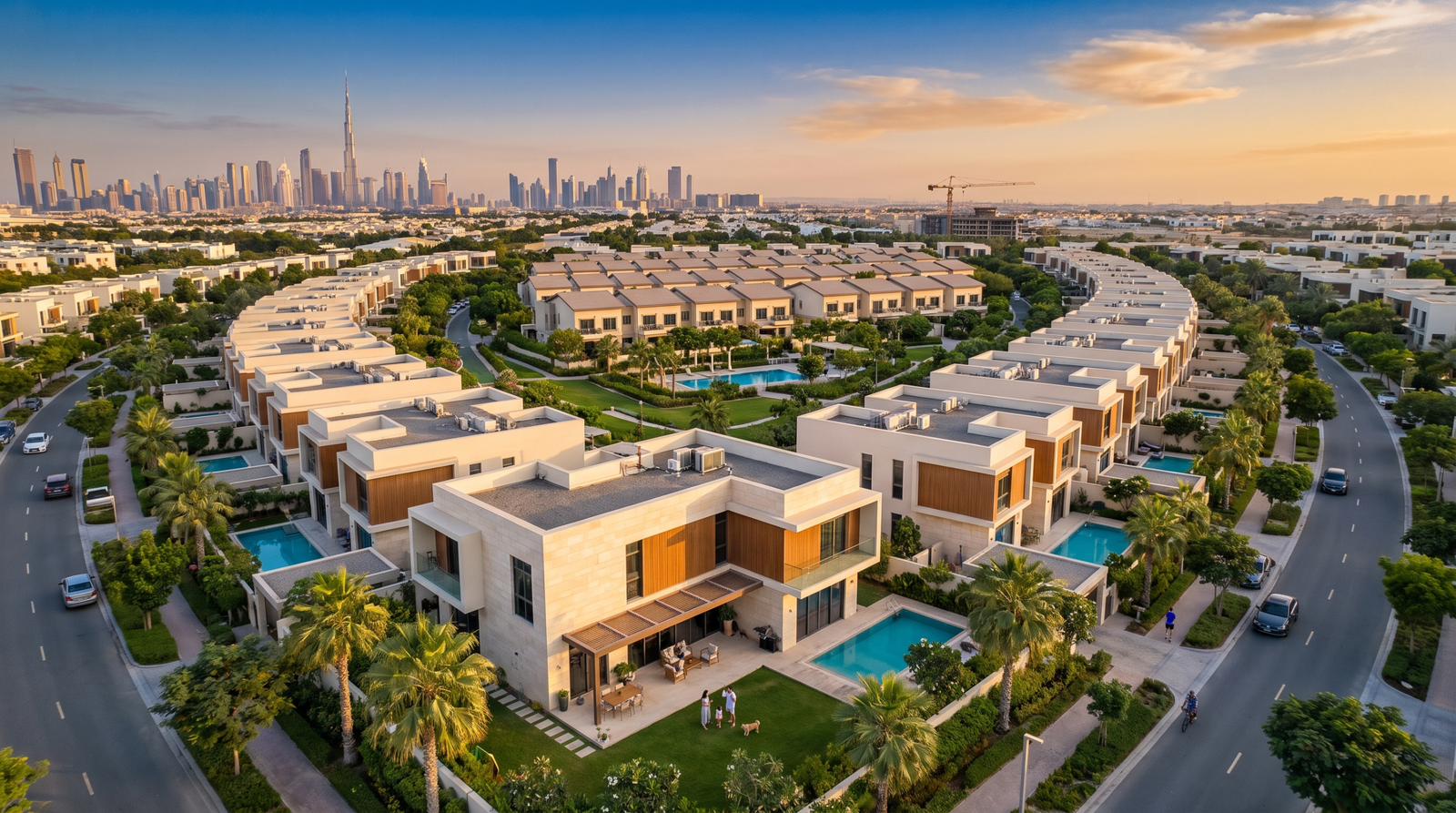
For the seasoned London investor, the concept of the “15-minute city” is no longer a novelty; it is a necessity. In a post-pandemic world, the demand for walkability, green space, and localized infrastructure has redefined property premiums from Marylebone to Canary Wharf. However, while European capitals struggle with the architectural constraints of the past, Dubai is building the future from the ground up.
The Dubai 2040 Urban Master Plan is not just a government vision; it is a fundamental restructuring of the emirate into a “20-minute city.” For UK investors and landlords, this plan represents the most significant de-risking of the Dubai real estate market in a generation.
1. Beyond the Skyscrapers: Understanding the “20-Minute City”
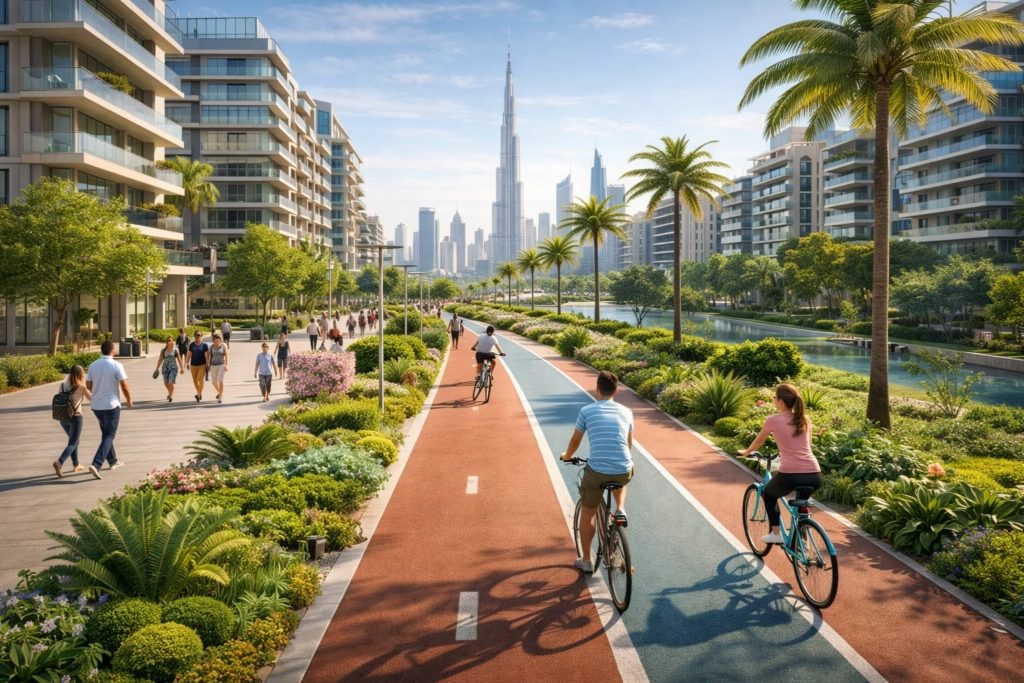
The core of the Dubai 2040 Urban Master Plan investment thesis lies in human-centric design. The goal is simple yet ambitious: ensure that 80% of daily services can be accessed within 20 minutes by foot or bicycle.
For a UK audience accustomed to the “Garden Cities” movement (like Letchworth or Welwyn), this shift is familiar. However, Dubai is executing this at a scale unseen in Britain. The plan focuses on five main urban centers. While Deira and Bur Dubai represent the heritage, and Downtown/Business Bay the business core, new hubs like the Expo 2020 District and Dubai Silicon Oasis are being engineered specifically for this 20-minute accessibility.
Why this matters for capital appreciation:
In London, “walkability” to a Tube station adds an average of 10-15% to a property’s value. In Dubai, as the city transitions from a car-dependent desert metropolis to a series of interconnected, walkable hubs, properties within these 20-minute zones will see the highest rate of property appreciation.
2. The Green Premium: 150 Meters to Serenity
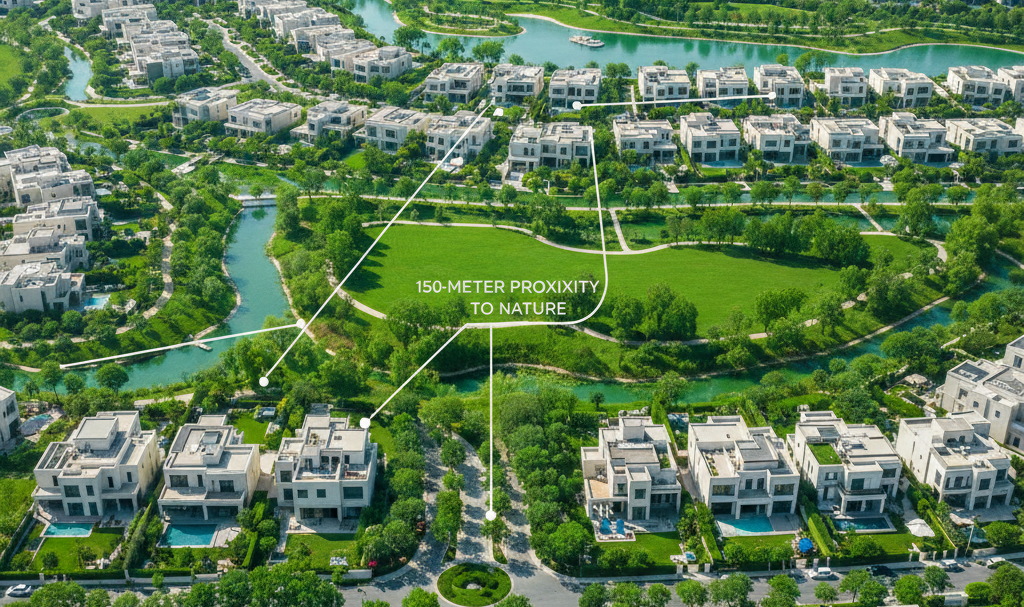
One of the most striking KPIs of the 2040 plan is the commitment to green space. The plan mandates that every resident will live within 150 meters of a park or recreation area.
To achieve this, Dubai is doubling its green and recreational areas and creating a “Green Corridor” to link residential areas with workplaces. For a UK family moving to Dubai, the lack of “greenery” was historically the biggest hurdle. By adding 152 new parks and 33 km of cycling paths, Dubai is directly removing the friction for UK expat relocation.
The Investor’s Angle: Rental Yield Stability
As a landlord, your biggest enemy is the “void period.” Properties in walkable, green communities have historically shown:
- Higher Retention: Tenants stay an average of 18 months longer in “green” communities compared to isolated high-rises.
- Yield Resilience: During market corrections, family-friendly, walkable areas (like Dubai Hills or the newer 2040-compliant zones) maintain their rental levels far better than speculative luxury towers.
3. The Population Surge: Solving the Supply-Demand Equation
Any successful Dubai 2040 Urban Master Plan investment strategy must account for the staggering population projections.
Dubai’s population is expected to grow from roughly 4 million in 2025 to 5.8 million by 2040. This is not just a number; it is a requirement for roughly 120,000 to 150,000 new housing units over the next decade to keep up with demand.
Comparing Dubai vs. London Property Investment
In London, supply is throttled by the “Green Belt” and planning permissions, leading to stagnation. In Dubai, the supply is being surgically directed by the 2040 plan into specific high-density zones. For a UK investor, this provides a “moat.” By investing in areas designated for the 100 new private schools arriving by 2033, you are positioning your asset in the path of the highest-paying demographic: the professional expat family.
4. Education and Infrastructure: The Bedrock of Long-Term Wealth
UK families aren’t just moving for the tax-free salaries; they are moving for the lifestyle. The 2040 plan integrates 100 new private schools and a 25% increase in designated educational spaces.
When we look at rental yields in Dubai, the highest performing assets are consistently those within a 10-minute drive of top-tier international schools. The 2040 plan decentralizes these schools, ensuring that the “school run”—a notorious headache for London parents—becomes a thing of the past in Dubai.
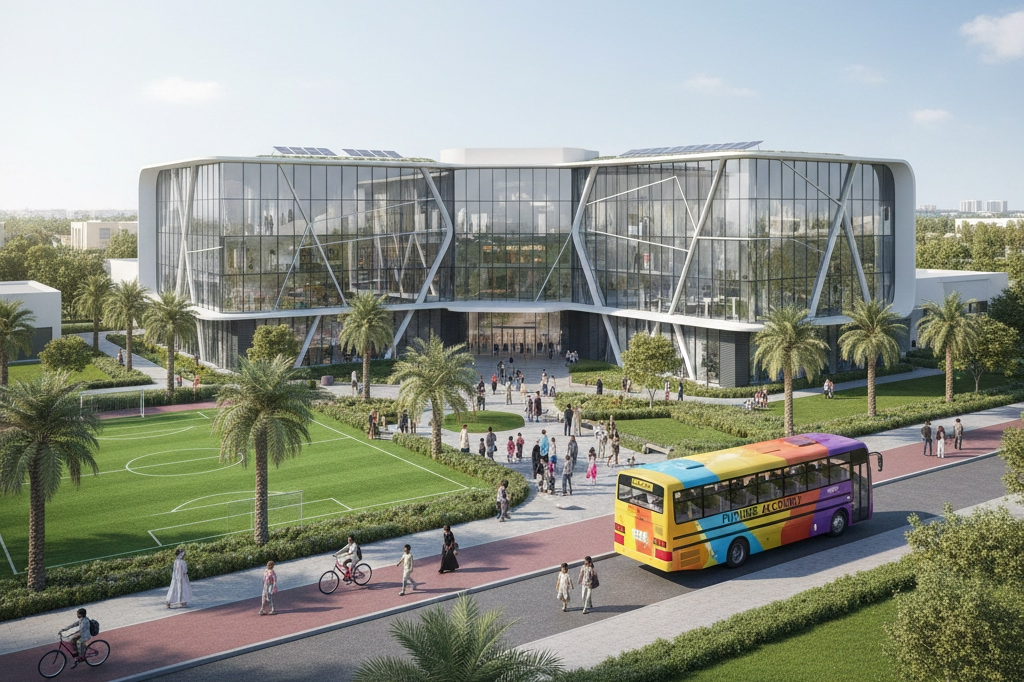
5. Strategic Connectivity: The 33km Advantage
Infrastructure has always been Dubai’s “unfair advantage.” However, the 2040 plan moves away from just “more lanes on the E11” toward sustainable transport. The 33 km of new cycling paths and the expansion of the Dubai Metro (including the Blue Line) are designed to serve 55% of the population within 800 meters of a public transport station.
For the UK landlord, this is a signal to look at Off-plan property Dubai options that sit along these transit-oriented development (TOD) corridors. Much like the “Crossrail effect” in the UK, which saw property prices along the Elizabeth Line soar, Dubai’s 2040 transport hubs are the clear winners for future resale value.
6. Case Study: Dubai Hills Estate – The 20-Minute City in Action
To understand the financial power of the 2040 vision, one only needs to look at Dubai Hills Estate. While much of the Master Plan looks toward 2040, Dubai Hills serves as the current “proof of concept” for UK investors.
The “Walkability” Premium
In Dubai Hills, the integration of the Dubai Hills Park (the longest park in any residential community) directly mirrors the 2040 mandate of having green space within 150 meters of every home.
- The Result: Since its launch, properties facing or within a 5-minute walk of the park have seen a 25-35% higher capital appreciation compared to those in car-dependent areas of the same district.
Education as a Value Driver
With three world-class schools (including GEMS International) located within the community, the “school run” is reduced to a short walk or cycle. For the UK landlord, this has created a “waiting list” effect.
- The Investor Impact: Occupancy rates in Dubai Hills have remained consistently above 95%, even during market fluctuations, as families prioritize the 20-minute lifestyle over cheaper, more isolated alternatives.
The Lesson for 2040 Investors
Dubai Hills isn’t the end; it’s the blueprint. The Dubai 2040 Urban Master Plan aims to replicate this success in areas like Dubai Creek Harbour and Wasl Gate. By identifying these “Next Dubai Hills” early, UK investors can capture the same growth curve that early Dubai Hills buyers enjoyed.
7. The Verdict: Why Now?
We are currently in a unique window. As we move through 2026, the first phases of the 2040 infrastructure are becoming visible. Yet, the “20-minute city” premium hasn’t been fully priced into many emerging neighborhoods.
For a UK investor, the Dubai 2040 Urban Master Plan offers something rare: a government-backed guarantee of where the future demand will be. While London grapples with economic uncertainty, Dubai is doubling down on livability, sustainability, and growth.
Key Takeaways for Your Portfolio:
- Target “Green” Hubs: Prioritize developments where the 150m-to-park rule is already being implemented.
- Follow the Schools: 100 new schools mean 100 new micro-markets for high-yield rentals.
- Buy into the 20-Minute Radius: Walkability is the new luxury.
Final Thoughts: Building a Legacy in a Changing City
At J2 Hub, we don’t just look at the building; we look at the master plan. The Dubai 2040 Urban Master Plan is the most comprehensive data set we have for predicting where the next decade’s millionaires will be made.
If you are a UK investor looking to diversify away from the stagnant London market, the 20-minute city offers a blueprint for not just better living, but superior financial returns.
Ready to see which projects align with the 2040 vision? [Contact James Sahota and the J2 Hub team today for a strategic portfolio review.]