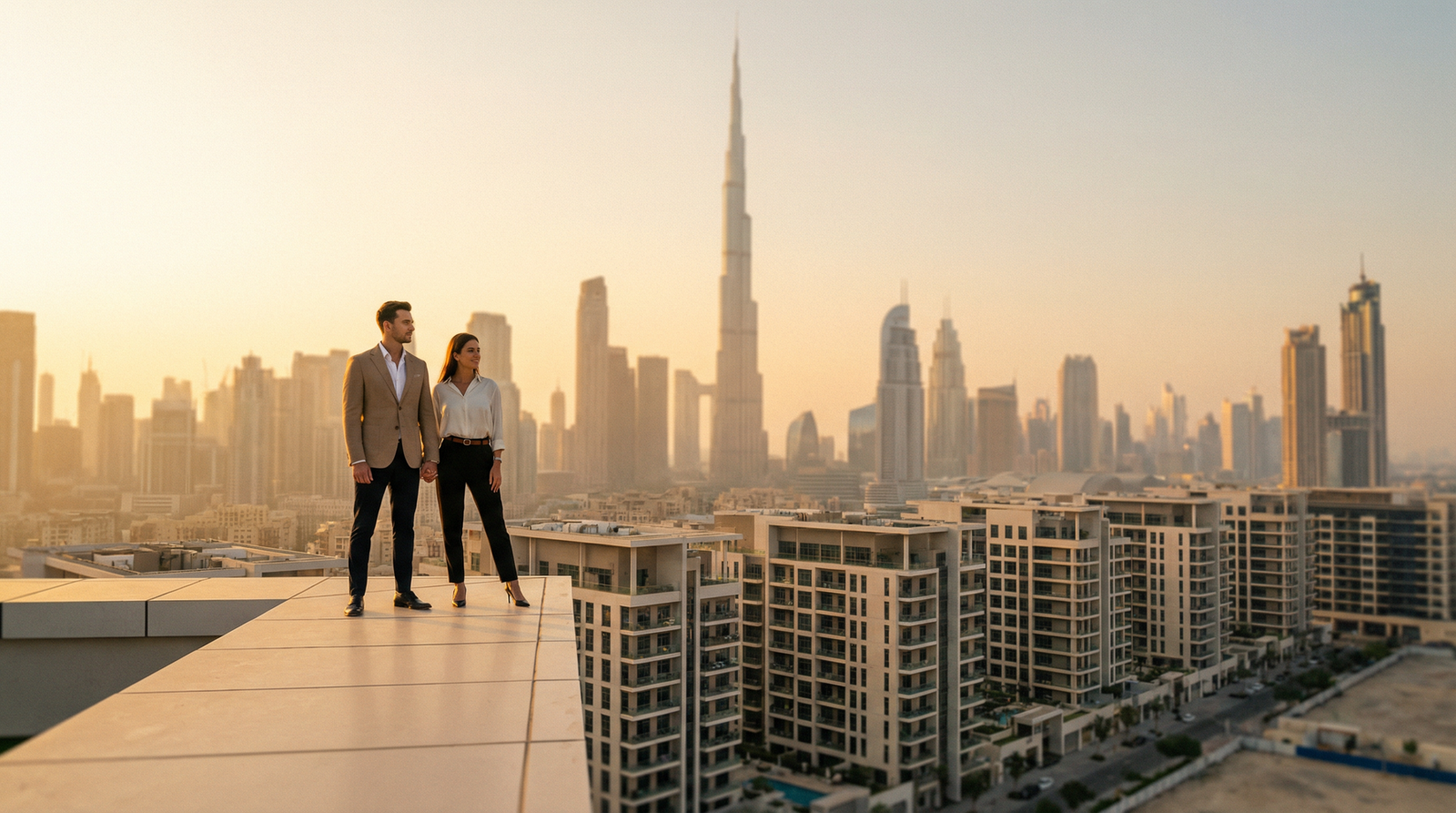
Dubai’s property market opened 2026 with record-breaking momentum. January alone saw AED 72.4 billion in transactions — the highest monthly figure in the emirate’s history. But by late February, Iran’s missile strikes on Gulf targets sent shockwaves through investor sentiment, the DFM real estate index dropped roughly 30 per cent, and first-time buyers found themselves asking a very different question: is now still the right time to buy?
The short answer is yes — but only if you avoid the mistakes that cost newcomers the most. Whether you are an expat planning to stop renting or a global investor entering the UAE market for the first time, this guide walks you through the seven most common errors first-time buyers make in Dubai, updated for the realities of April 2026.
Mistake 1: Letting Headlines Make Your Decision
First-time buyers are especially vulnerable to headline-driven fear. After Iran’s attacks in late February 2026, site visits slowed, off-plan signing ceremonies were postponed, and social media was flooded with crash predictions. But here is what the data actually shows: physical property prices have only softened by five to ten per cent in the luxury segment, while mid-market prices have remained largely stable. Transaction volumes are still running at over three billion dollars per week.
The DFM real estate stock index crash reflects investor sentiment about publicly listed developer shares — it does not represent the price per square foot of an apartment in JVC or Dubai Hills. The two are very different things. Historically, every period of geopolitical uncertainty in Dubai — from the 2008 crisis to COVID in 2020 — has been followed by a strong recovery. Buyers who entered during COVID saw gains of over sixty per cent.
What to do instead: separate sentiment from fundamentals. Look at transaction volumes, rental yields, and population growth — not stock tickers. If you are buying to live in the property or hold it for rental income over five-plus years, short-term geopolitical noise should inform your timing and negotiation strategy, not cancel your plans entirely.
Mistake 2: Only Looking in Your Neighbourhood
Many first-time buyers in Dubai start and end their search in the area where they currently rent. If you live in Downtown, you look in Downtown. If you are in Marina, you browse Marina listings. This is understandable — you know the commute, the coffee shops, the community. But it often means you overpay for familiarity when better value exists elsewhere.
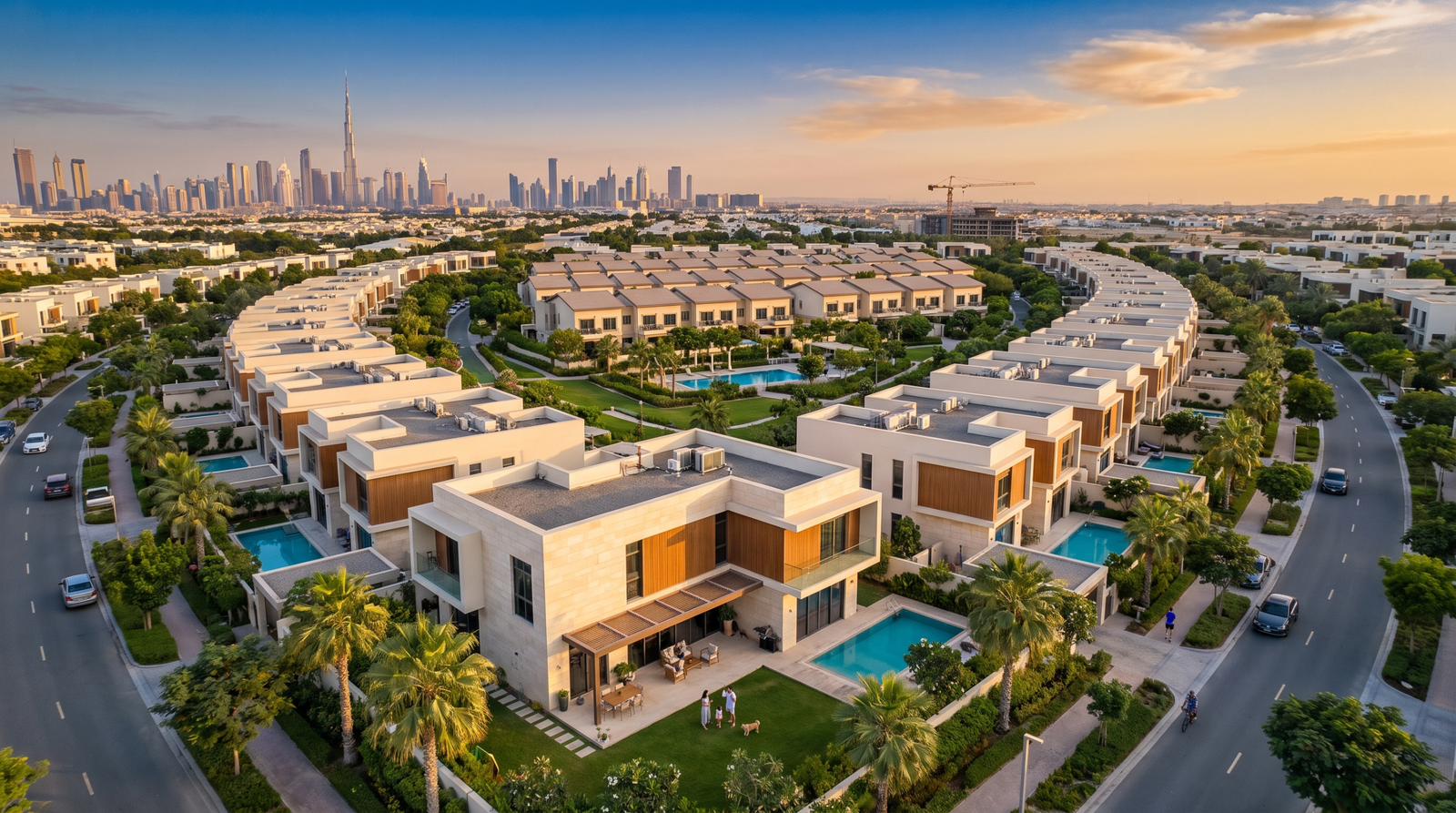
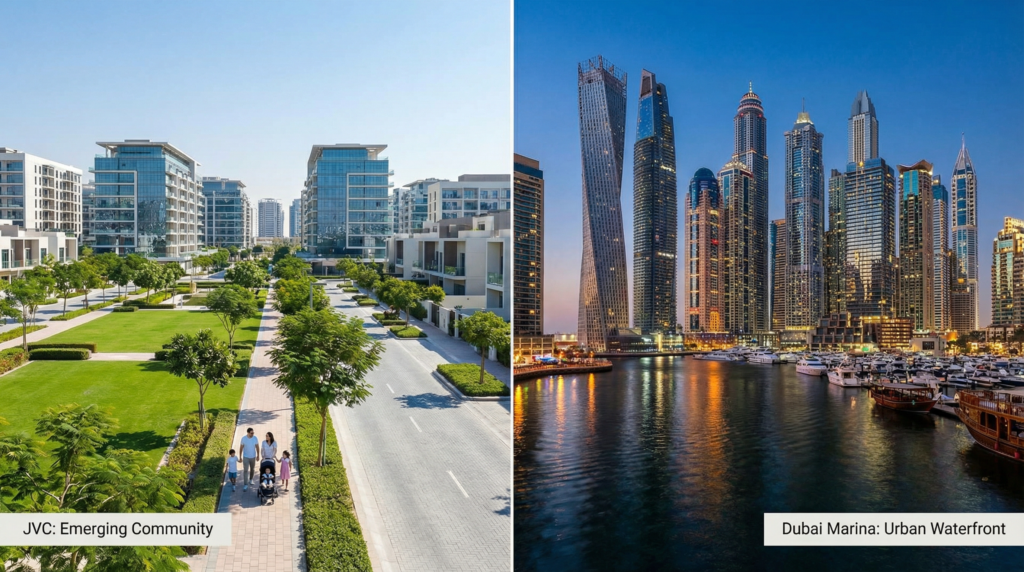
In 2026, some of the strongest opportunities for first-time buyers are in emerging communities like Dubai South (positioned near the new Al Maktoum Airport expansion), Dubai Creek Harbour, JVC, and Town Square. These areas offer modern builds, strong rental demand, and entry prices significantly below established prime locations, with more room for capital appreciation.
What to do instead: research at least three to five areas before committing. Compare price per square foot, rental yields, proximity to schools and transport links, and the developer’s track record. Communities with good infrastructure plans in the Dubai 2040 Urban Master Plan tend to outperform over time.
Mistake 3: Ignoring Total Costs Beyond the Purchase Price
One of the most common shocks for first-time buyers is discovering that the sticker price is just the beginning. In Dubai, additional transaction costs can add roughly seven to eight percent to the total purchase price. These include the four per cent Dubai Land Department (DLD) registration fee, agent commission (typically two per cent), mortgage arrangement fees if financing, property valuation charges, and the cost of a snagging inspection for ready properties.
For a property priced at AED 1.5 million, that means budgeting an extra AED 105,000 to AED 120,000 on top of your down payment. Many first-time buyers exhaust their savings on the deposit alone and then scramble to cover registration fees.
What to do instead: build a complete cost sheet before you start viewing properties. Factor in DLD fees, agent fees, mortgage costs, maintenance deposits, and moving expenses. If you qualify for Dubai’s First-Time Home Buyer Programme, some of these costs can be significantly reduced — more on that below.
Mistake 4: Not Using the First-Time Home Buyer (FTHB) Programme
Launched in July 2025, Dubai’s FTHB Programme is one of the most significant government initiatives for new buyers in the emirate’s history, and yet many first-time buyers are still unaware it exists. The programme is a collaboration between the Dubai Land Department, the Department of Economy and Tourism, and over thirteen major developers including Emaar, DAMAC, and Binghatti.
By January 2026, the programme had already helped more than 2,000 residents purchase their first home, generating over AED 3.25 billion in residential sales. More than 41,000 people have registered, showing the scale of latent demand from long-term renters.
What the programme offers: priority access to new project launches before they go to the general market, preferential pricing from participating developers (discounts of five to ten per cent are common), the ability to pay the four per cent DLD registration fee in interest-free instalments, and competitive mortgage rates through partner banks like Emirates NBD and Dubai Islamic Bank.
Eligibility is straightforward: you must be a UAE resident of any nationality, aged eighteen or over, must not currently own a freehold residential property in Dubai, and must be purchasing a property valued below AED 5 million. Registration is free through the DLD website or the Dubai REST app.
What to do instead: register for the FTHB Programme before you begin your property search. It costs nothing and could save you tens of thousands of dirhams.
Mistake 5: Chasing Yield Without Checking Demand
Dubai is known for strong rental yields — averaging around seven per cent gross for apartments and about five per cent for villas. These figures attract first-time investors, but high headline yields can be misleading if the area has weak tenant demand, high vacancy rates, or an oversupply of similar units.
In 2026, approximately 42,000 to 45,000 new residential units are expected to enter the market. Some emerging areas may experience temporary oversupply, particularly in the off-plan mid-market segment. If you buy a one-bedroom apartment in a remote community with dozens of identical towers completing around the same time, your actual yield could fall well below the marketed figure.
What to do instead: look beyond the percentage. Research actual vacancy rates in the building and community, verify rental comparables on portals like Property Finder and Bayut, check whether the area has schools, retail, and transport links that attract long-term tenants, and consider the volume of upcoming supply in that specific micro-market. Communities like JVC, Dubai Marina, and Business Bay consistently show strong rental absorption because they offer convenience and lifestyle alongside affordability.
Mistake 6: Trying to Time the Market Perfectly
With geopolitical tension, rising supply, and media speculation about a possible correction, many first-time buyers are sitting on the sidelines waiting for the “perfect” moment. This is one of the most expensive mistakes you can make.
Market timing is nearly impossible, even for professionals. Dubai’s property market has never moved in a straight line, and waiting for prices to drop ten per cent could mean missing two years of rental income, rising prices in undersupplied areas, and the best units in new launches. The most likely scenario for 2026 is not a dramatic crash but a more balanced market — prices rising modestly in established communities, holding flat in some areas, and easing slightly where new supply outpaces demand.
Analysts at Knight Frank, CBRE, and Cushman & Wakefield all expect continued price and rental growth of eight to twelve per cent in well-located segments. The IMF projects UAE economic growth of around five per cent in 2026, well above global averages. Falling interest rates following US Federal Reserve cuts are also improving mortgage affordability for mid-market buyers.
What to do instead: focus on time in the market rather than timing the market. If you find a property that meets your budget, location, and lifestyle needs — and the numbers work for rental income or personal use — act on it. Negotiate hard (the current sentiment gives buyers more leverage than they have had in years), but do not wait for a crash that may never come.
Mistake 7: Skipping Due Diligence on the Developer
In a market with hundreds of active developers and record off-plan launches, choosing the wrong developer can cost you years of delays, substandard build quality, or in the worst case, a stalled project. This risk is amplified in 2026, as some smaller developers are under financial pressure from rising construction costs, geopolitical uncertainty, and tighter bond markets.
Reports from Bloomberg indicate that some Dubai developer bonds have moved into distressed territory. While this does not mean these projects will fail, it is a clear signal that not all developers are on equal footing financially.
What to do instead: verify the developer’s track record of delivering on time through the Dubai REST app or RERA’s developer database. Check that the project has an active escrow account (legally required in Dubai for off-plan sales). Prioritise developers with a proven history of handovers, such as Emaar, Meraas, Nakheel, and DAMAC. For smaller developers, research their financial backing and previous project reviews. A RERA-certified agent can help you navigate this process.
Bonus: What April 2026 Actually Means for First-Time Buyers
The current environment is not a crisis for first-time buyers — it is an opportunity in disguise. Here is why:
Negotiating power is the strongest it has been in years. Sellers and developers who need to close transactions are more flexible on price, payment terms, and fee waivers than they were six months ago. The FTHB Programme is fully operational with expanding developer and bank participation. Interest rates are trending lower, making mortgage repayments more affordable. The government continues to support long-term demand through golden visa programmes, infrastructure investment, and initiatives like the Dubai 2040 Master Plan. Physical property fundamentals — population growth, rental demand, zero property tax, strong yields — remain unchanged.
The buyers who will look back on this period most favourably are those who did their homework, avoided emotional decisions, and bought based on fundamentals rather than headlines.
Ready to take the first step? Get in touch for a free, personalised consultation on buying your first property in Dubai. We help first-time buyers navigate the market with confidence — from FTHB registration to handover.