Dubai’s real estate market is having a moment, and not the kind most people expected at the start of 2026.
Five weeks into the Iran-UAE conflict, the headlines are doing what headlines do best: screaming disaster. “Dubai Real Estate Down 20%!” “Market Crash!” “Is Dubai Finished?” If you have been doom-scrolling from your flat in London or Manchester, you would be forgiven for thinking the entire city has gone up in smoke.
But here is what the headlines are not telling you: the actual property market has only dipped between 4 and 7 percent from its peak. The 20 to 30 percent drops you are reading about refer to developer stock prices on the Dubai Financial Market, not the bricks and mortar you would actually be buying. There is a massive difference, and understanding it is the difference between panic and profit.
I have been based in Dubai for over four years now. I started from scratch here. No connections, no safety net, no family money. Today I own multiple properties, run successful businesses, and I have watched this city reward people who showed up and committed. When the conflict started, a lot of people ran. I stayed. Because when the days were good, I was here, and now that the days are harder, I want to be here too. You do not abandon a place that never abandoned you.
That conviction is not blind optimism. It is backed by data, by history, and by a government that has consistently shown it knows how to protect its economy and its people.
What Actually Happened to the Market
Let us start with what is real. Dubai recorded AED 917 billion in property transactions across more than 270,000 deals in 2025, a 20% year-on-year increase that shattered every previous record in the Dubai Land Department’s history. January 2026 alone saw AED 72.4 billion in residential sales, the single highest month in Dubai real estate history.
Then the conflict began in March. In the first half of that month, property transactions dropped by roughly 25%, from about 8,199 units to around 6,129 units across a two-week period. New buyer enquiries fell approximately 45%. International buyers, particularly those unfamiliar with the region, hit pause.
But here is what matters: transactions did not stop. They slowed. Deals are still closing. In fact, just last week, a plot in Palm Jumeirah reportedly sold for a billion dirhams. The investors who understand this market, the ones who have done their homework and know the fundamentals, are still transacting.
From conversations I have been having with larger firms here in Dubai, outfits that were closing 30 to 40 deals a day are now closing one or two a week. That is a significant slowdown, no question. But it is not zero. And the people who are buying right now are serious, long-term investors, not speculative flippers riding the wave.

Why This Recovery Will Be Faster Than Previous Ones
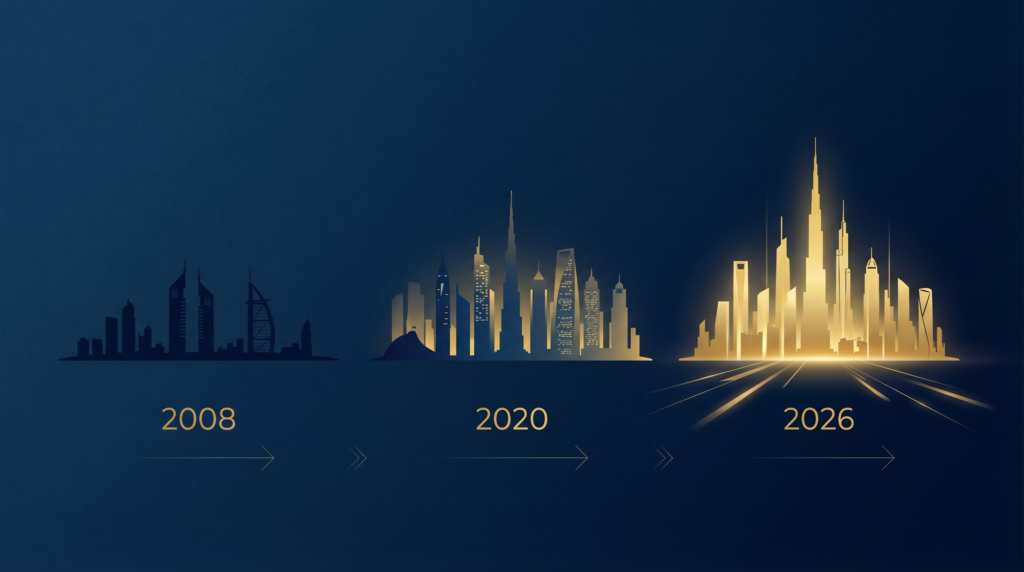
Dubai has been through this before. More than once. And each time, it has come back stronger and faster.
2008 Global Financial Crisis: Property prices plummeted roughly 50% from their peak. GDP took approximately two years to recover. The full property market recovery took about five years, stabilising around 2013 to 2014. But the city was much younger then, regulatory frameworks were still being built, and the world was dealing with a systemic banking meltdown.
2014 Oil Price Crash: Prices corrected by 25 to 30 percent between 2014 and 2019 as oil revenues dropped and oversupply crept in. Recovery was slower because it coincided with broader regional economic headwinds.
2020 Covid-19: The market dipped sharply but bounced back remarkably fast. By late 2021, Dubai was already posting record transaction volumes. The introduction of remote work visas, relaxed visa regulations, and aggressive government stimulus accelerated the recovery well beyond what most analysts predicted.
2026 Iran Conflict: So far, a 4 to 7 percent price dip and a 25% drop in transaction volume. Compared to a 50% price crash in 2008 or the prolonged bleed of 2014 to 2019, this is a very different situation. The fundamentals are stronger. The regulation is more mature. And the government response has been faster and more targeted than ever before.
This is exactly why I believe Dubai will recover at least two to three times faster than it did after Covid. The structural foundations are incomparably stronger than they were during any previous downturn.
The Government Is Not Sitting Around
One of the things that continually impresses me about the UAE, and one of the reasons I tell every UK client to pay attention, is how quickly and decisively the government acts.
On 30 March 2026, Sheikh Hamdan bin Mohammed approved a AED 1 billion economic incentive package specifically designed to support businesses through the conflict period. The implementation began on 1 April 2026 and runs for three to six months.
Government fees, including licence fees, accommodation fees, and service improvement fees, have been deferred for three months for both new and renewing businesses. Hotels and holiday homes can defer 100% of their Tourism Dirham and sales fees. The customs data grace period has been extended from 30 to 90 days for importers and traders. And residency permit processing has been streamlined to make it easier for skilled professionals to stay.
For context, Dubai’s economy expanded 5.4% in 2025 with GDP crossing AED 937 billion. The economy is projected to grow at 4.5% in 2026, comfortably above the anticipated global GDP growth average of 3.1%. This is not a government scrambling to save a sinking ship. This is a government making strategic investments to ensure that businesses and residents are protected during a temporary disruption.
Compare that to the UK. When Covid hit, the furlough scheme took weeks to roll out. During the cost-of-living crisis, support was piecemeal and slow. Here in Dubai, the response was measured in days, not months.
The Iranian Investment Question
This is the part that makes some investors nervous, and I understand why. Iranians are among the top nationality groups investing in Dubai property. Estimates suggest the Iranian diaspora has moved approximately AED 730 billion, roughly $200 billion, of capital into the UAE, with a significant portion concentrated in real estate.
Emaar told us directly, about six or seven months ago, that Iranians were the number one buyers in Creek Harbour and a strong second in Dubai Hills. These are not cheap properties. Even a one-bedroom apartment in Creek Harbour today is pushing AED 2 million. These are high-ticket investors.
The concern, naturally, is what happens if Iranian buyers with cancelled or suspended visas decide to stop making payments. If defaults occur on a meaningful scale, could that destabilise the market?
Here is why the answer is probably no, or at least, not for long.
First, the major developers are well-capitalised. Emaar, for example, has substantial cash reserves sitting in escrow accounts. By all available data, they are covered for at least the next two years even in a worst-case scenario.
Second, the SPA (Sale and Purchase Agreement) structures in Dubai heavily protect developers. If a buyer has paid less than 40% and defaults, the developer keeps everything that has been paid. There is no refund, no negotiation. The developer retains the funds and, near handover, simply resells the unit, often at a higher price than the original sale. It is painful for the defaulter, but it means the developer’s balance sheet is protected.
Third, many Iranian investors are already navigating the visa situation. Those with Golden Visas linked to property ownership are being processed through UAE embassies and, upon submitting the right documentation, are being allowed back into the country. This is not a permanent lockout. It is a security-driven reset that is gradually being resolved.
My honest assessment? We might see three to six months of softened activity in specific segments. But the structural damage that some commentators are predicting simply does not match the data or the mechanisms in place.
What UK Investors Should Be Thinking Right Now
If you are a UK-based investor or someone considering a move to Dubai, this might be the most important section of this entire article.
The best time to invest in any market is when sentiment is low but fundamentals are strong. Right now, sentiment is shaky. International headlines are alarming, buyer enquiries have dropped, and there is genuine uncertainty about the conflict’s duration. But the fundamentals? They are arguably the strongest they have ever been.
Dubai recorded its best year ever in 2025. The government has a billion-dirham stimulus in play. Major developers are financially secure. Population growth continues to drive demand. And prices have only corrected by 4 to 7 percent, a healthy dip, not a crash.
For UK buyers specifically, there is an additional factor: the regulatory environment has matured enormously since the 2008 days. RERA oversight is robust, escrow regulations protect your money during construction, and the Golden Visa programme, which links eligibility to property value, offers genuine long-term residency security.
What I would encourage you to do is what we have been doing with our clients: take a strategic view. Look at where the handovers are happening in four to five years. Those projects will still appreciate regardless of what is happening in the next few months. Be honest with yourself about your risk tolerance, but do not let fear-driven headlines make your decisions for you.
And if you already own property here, it is worth considering asset protection structures like trusts, foundations, and registered wills. Coming from the UK, these concepts are familiar. Setting up a foundation in Dubai costs roughly $10,000 to $12,000 with a maintenance cost of about $300 to $400 per month. Think of it as insurance. If your assets are governed by a foundation in a separate jurisdiction, they are protected regardless of what happens with visas, conflicts, or anything else.
The Businesses That Stay Will Win
This applies whether you are a broker, an investor, or a business owner. The companies that survive this period are the ones that will thrive when the market comes back, and it will come back.
We have already seen it happening. Some companies have panicked, cutting salaries, firing staff, closing down entirely. In my opinion, that is premature. If you are a business of any meaningful size, you should have reserves to cover six to eight months. We made a conscious decision as a company: no firings, no salary cuts. We sit with our team twice a week, check on their physical and mental wellbeing, and make sure nobody is falling through the cracks.
And we have seen the market respond to that approach. Some of the best client conversations our team has had in the past few weeks have come from genuine human connection, calling clients not to sell them something, but to ask how they are feeling. Those conversations have led to meetings, proposals, and real business. When the market recovers, the people who built relationships during the hard times are the ones who will be remembered.
The Bottom Line
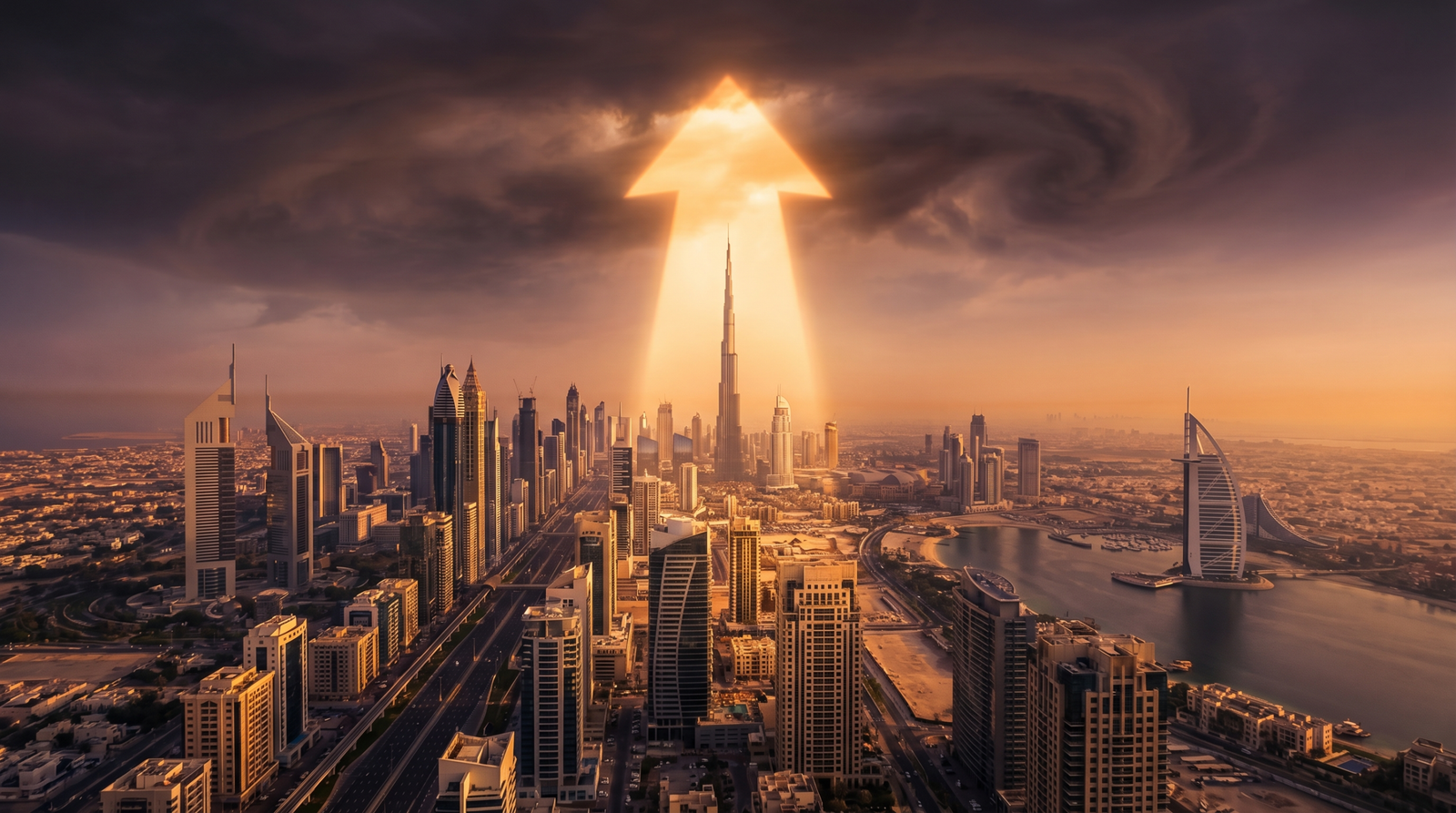
Dubai is not crashing. It is pausing. And if history is any guide, and the data strongly suggests it is, this pause will be shorter and shallower than anything the market has experienced before.
The government is responding with speed and scale. Developers are financially protected. The regulatory environment is more mature than ever. And the fundamental demand drivers, population growth, visa reforms, global connectivity, have not changed.
For UK investors sitting on the fence, the question is not whether Dubai will recover. It is whether you will be positioned to benefit when it does.
If you would like to discuss your options, whether you are looking at your first Dubai investment or reviewing an existing portfolio, reach out. We offer free consultations and honest advice, even if you did not buy through us, and even if you would prefer to sell through someone else. The goal right now is to help people make informed decisions, not to close deals at any cost.